Mixing Prints by Color: The One Rule That Makes Pattern-Clashing Look Intentional
Print mixing looks like fashion’s highest-wire act and runs on one teachable rule — the shared color that links the patterns — plus a scale trick and a progression that builds the eye. The print-mixing guide: the principle, the formulas and the path.
The Shared-Color Principle
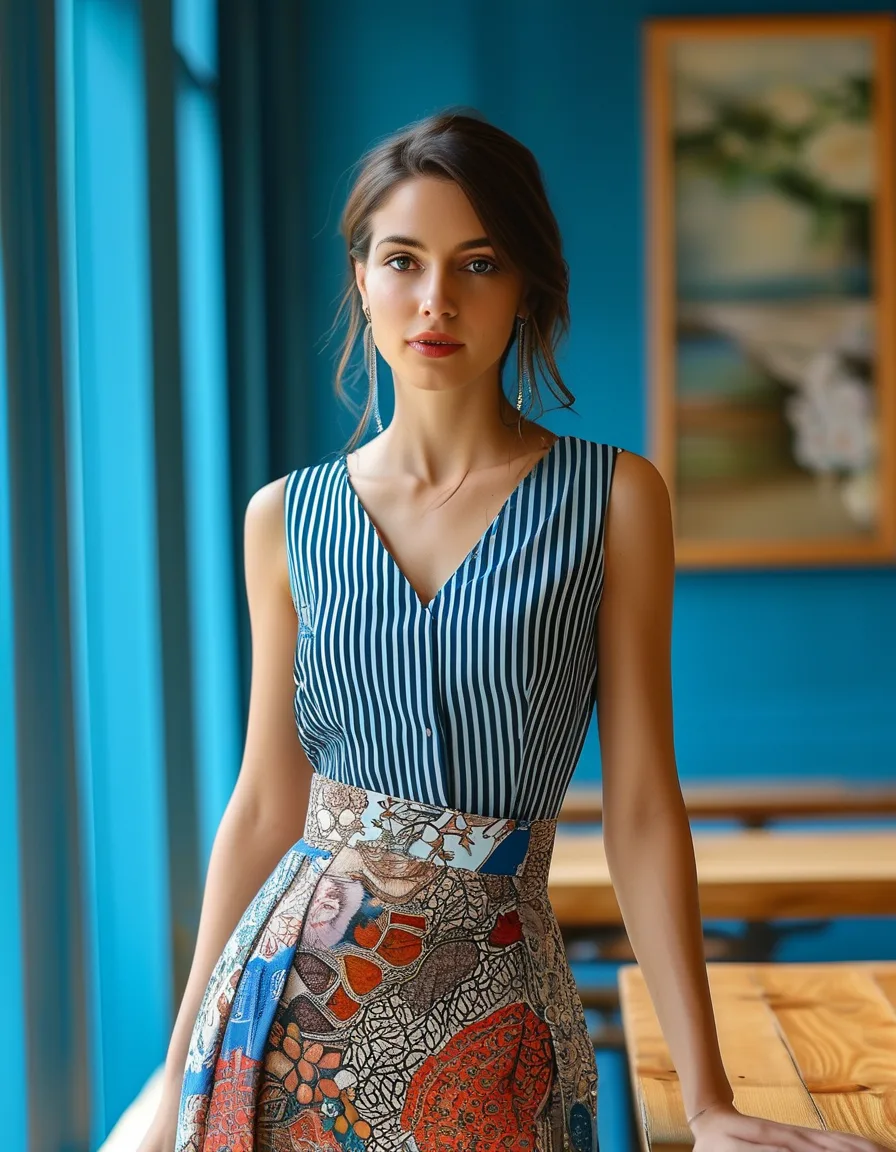
The rule under every good clash: the linking logic (the two prints sharing at least one color reading related — the eye finding the thread and declaring intention; the navy-in-both being the classic bridge), the scale contrast (the big print with the small print — the two-large competition versus the large-small hierarchy; the stripe being the near-neutral print that mixes with everything), the density balance (the busy print partnered with the breathing one — the visual rest built in), the ground-color trick (the prints on matching backgrounds — the both-on-cream harmony), and the anchor requirement (the solid piece somewhere — the shoes, bag or layer giving the eye a landing per the balance logic).

The Mixing Formulas
The proven combinations: the stripe-plus-floral classic (the breton over the floral midi — the entry-level mix; the shared color checked), the stripe-plus-leopard pairing (the leopard functioning as a neutral — the animal-print-as-solid secret being the mixer’s best shortcut), the polka-plus-stripe geometry (the dots and lines playing scales — the graphic-clean mix), the floral-plus-floral advanced move (the same-family florals at different scales — the ground-color match being critical here), the plaid-and-print autumn play (the check jacket over the printed dress — the fall logic), the print-plus-texture cheat (the pattern mixed with a TEXTURE — the tweed, cable-knit or crochet reading as pattern-lite; the training-wheels mix), and the accessory-scale entry (the printed scarf on the printed dress — the smallest-stakes version per the scarf logic).
The Confidence Progression
Building the eye: the level-one start (the print plus texture — the near-mix that acclimatizes), the level-two move (the stripe added to any print — the near-neutral bridge; the shared-color audit made habit), the level-three mixes (the two true prints at contrasting scales — the formulas above deployed; the mirror-and-photo check from the fit logic: the photo revealing what the mirror forgives), the level-four freedom (the three-pattern maximalism for the converted — the shared palette carrying it; the editor’s eye knowing when to stop per the one-statement inversion), the palette shortcut (the personal palette from the analysis logic making every mix easier — the wardrobe’s prints pre-linked by your colors), the confidence honesty (the print mixing being READ as confidence — the outfit worn like you meant it being half the trick per the confidence logic), and the closing frame (the highest-wire act revealed as one rule and a scale trick — the shared color, the big-with-small, the solid anchor; the clash, converted to intention; the prints, finally talking to each other). Share a color, contrast the scale, anchor with a solid: the mix, made deliberate.
One rule carries print mixing: the patterns must share a color — the eye finds the thread and declares intention. Then contrast the scale (big with small), anchor with one solid piece, and climb the ladder: print-plus-texture, then the stripe bridge (and leopard-as-neutral), then two true prints, with a photo check because the mirror forgives what the camera won’t.
Keep Reading
This article is for general styling and informational purposes only. Trends, sizing, availability and pricing may vary by brand and season.